

April has brought a number of important Employment Law changes for employers, with updates affecting Minimum Wage, Statutory Sick Pay (SSP), family leave, redundancy pay and recordkeeping requirements.
As part of the wider reforms many employers will associate with the Employee Rights Bill agenda, these changes create new obligations and potential risks for businesses if they are not prepared. From payroll updates through to holiday records and family leave rights, now is a good time to review your processes and make sure your organisation remains compliant.
Here is a reminder of the key changes taking effect in April 2026.
National Living Wage and National Minimum Wage increases from 1 April 2026
The new National Living Wage and National Minimum Wage rates took effect from 1 April 2026. The current rates are:
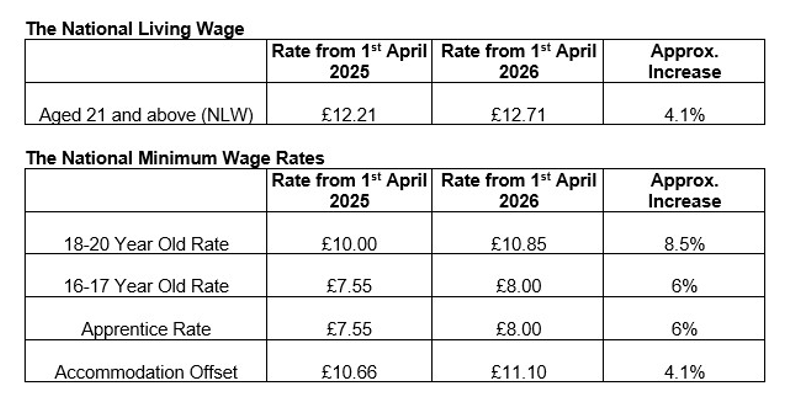
For employers, this is an important payroll and budgeting update. Businesses should ensure that pay rates have been reviewed across all eligible age bands and apprentice categories to remain compliant with minimum wage legislation.
New statutory payment rates from 6 April 2026
New statutory rates for Statutory Sick Pay and family-related statutory payments apply from 6 April 2026. The weekly rate of SSP for 2026 to 2027 is £123.25, or 80% of an employee’s average weekly earnings, whichever is lower.
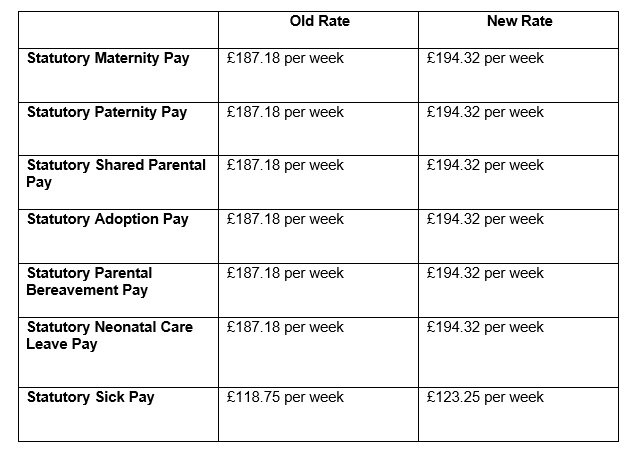
The average gross weekly earnings required to qualify for the various forms of family leave pay is proposed to increase from £125.00 per week to £129.00 per week from 6 April 2026.
Redundancy pay cap increase
For redundancy payment calculation purposes, a week’s pay can now be capped at £751 per week.
This is another important HR update for employers managing restructures, redundancies or workforce planning.
Statutory Sick Pay changes
Some of the most significant April reforms relate to Statutory Sick Pay.
The current three-day waiting period for SSP has been removed, meaning SSP is now available from day one of sickness absence in qualifying cases. In addition, the previous earnings threshold has been removed so that SSP is available to all workers regardless of earnings. For workers earning below the statutory SSP rate, SSP will be set at 80% of average earnings.
For employers, this means sickness absence procedures, payroll settings and internal policies may all need reviewing.
Paternity leave and unpaid parental leave changes
From 6 April 2026, the qualifying periods for paternity leave and unpaid parental leave have been removed. Employees are now able to access these rights from day one of employment.
There is also a further change to paternity leave entitlement. Employees will be able to take paternity leave following shared parental leave. Previously, taking shared parental leave could remove the right to take paternity leave.
These changes are particularly important for employers reviewing family-friendly policies and onboarding documentation.
New Partner Bereavement Paternity Leave
A new right to Partner Bereavement Paternity Leave now applies in certain tragic circumstances.
Where a mother, main adopter or main intended parent in a surrogacy arrangement dies within the first year of the child’s birth or placement for adoption, the child’s father or the spouse or partner of the mother, main adopter or intended parent can take up to 52 weeks of Partner Bereavement Paternity Leave.
The leave can begin on the day after the death, but it must end by the child’s first birthday or the first anniversary of the child’s adoption placement, or arrival in England, Scotland or Wales if adopted from overseas.
Partner Bereavement Paternity Leave is unpaid.
Holiday recordkeeping requirements
Employers will now be required to keep records showing compliance with statutory holiday entitlement and holiday pay rules for at least six years. Failure to do so will be a criminal offence.
This is a major compliance point for businesses. Accurate and accessible records will be essential, especially if an employer is challenged on holiday pay calculations or entitlement.
New Fair Work Agency
A new Fair Work Agency will be established to enforce workers’ rights. According to government guidance, the Agency will bring together enforcement powers relating to issues such as holiday pay, SSP, National Minimum Wage, unpaid tribunal awards and holiday recordkeeping duties. It will also have powers to require information, enter premises, issue penalties, bring claims on behalf of workers and recover enforcement costs.
For employers, this signals a stronger enforcement environment and a greater need to ensure HR and payroll processes are up to date.
Collective redundancy consultation: increase in protective award
The maximum penalty for breaching collective redundancy consultation requirements will increase from 90 days’ pay to 180 days’ pay per affected employee.
This significantly raises the risk for employers involved in larger redundancy exercises and reinforces the importance of following correct consultation procedures.
What employers should do now
With so many April changes now in effect, employers should take the opportunity to review:
- pay rates and payroll settings
- sickness absence procedures
- family leave policies
- redundancy processes
- holiday pay and holiday entitlement records
- wider HR documentation and manager guidance
Taking action now can help reduce compliance risk and ensure your business is prepared for the evolving Employment Law landscape.